O chat editorial em funcionamentoPlanning a 20-day content cycle
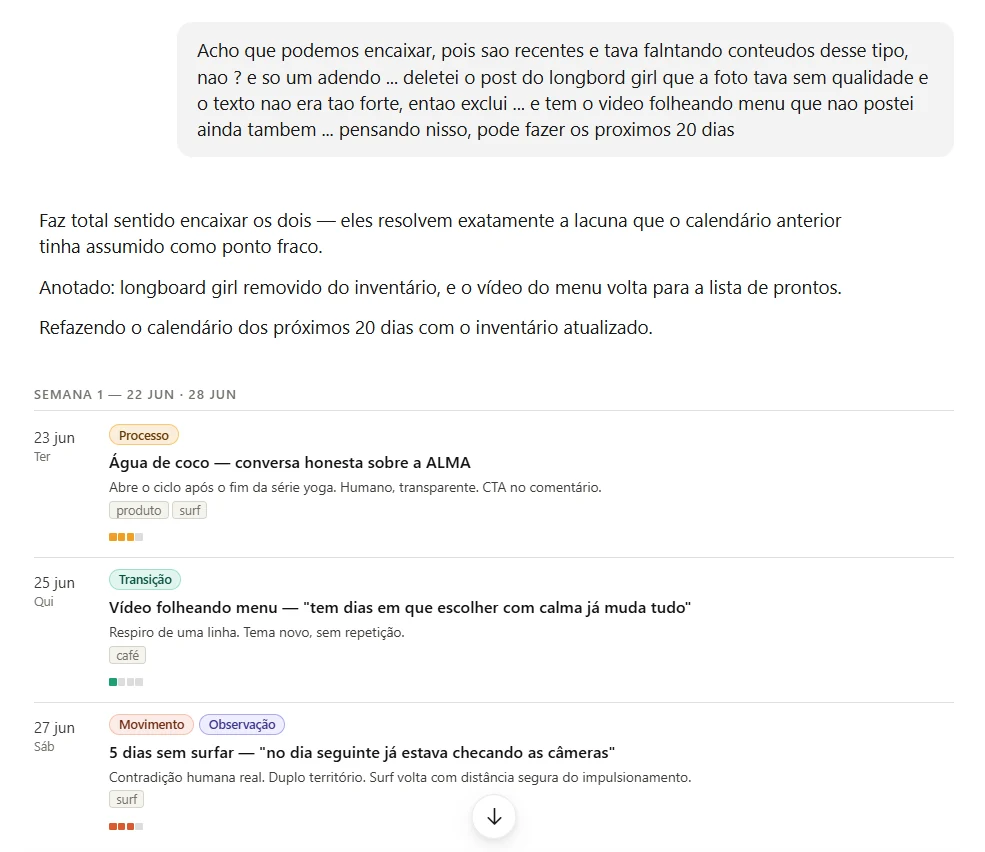
The planning followed the stories. Click the screenshot to enlarge.
ALMA began as a product idea during six months in Bali: cold brew e energy balls, inspired by café culture in Australia and Indonesia. Without the setup to make the products yet, I started with the brand story. I created an Instagram account and began writing again.
The biggest risk was falling into the cliché of “olha onde eu estou”. Guiado pelo conceito de StoryBrand, I kept coming back to the idea that the customer is the main character, not the brand. ALMA also didn’t need to sound like another wellness brand promising balance. We wanted real experiences, without turning every post into a life lesson.
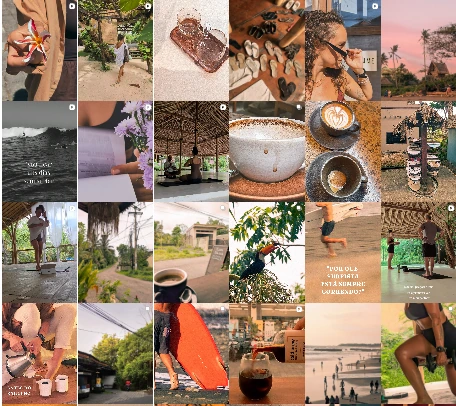
“The calendar came after the stories, nunca antes.”
The story always came first: a conversation at the counter, a scene at the beach, an everyday contradiction. I wrote the first draft while the memory was still fresh.
Then I started using Claude as an editorial partner. I built a filtro editorial de 10 camadas que questionava rigorosamente cada texto:
When the feed started feeling too uniform, I created a second prompt to balance themes, formats, and intensity, mixing longer narrative posts with lighter content.
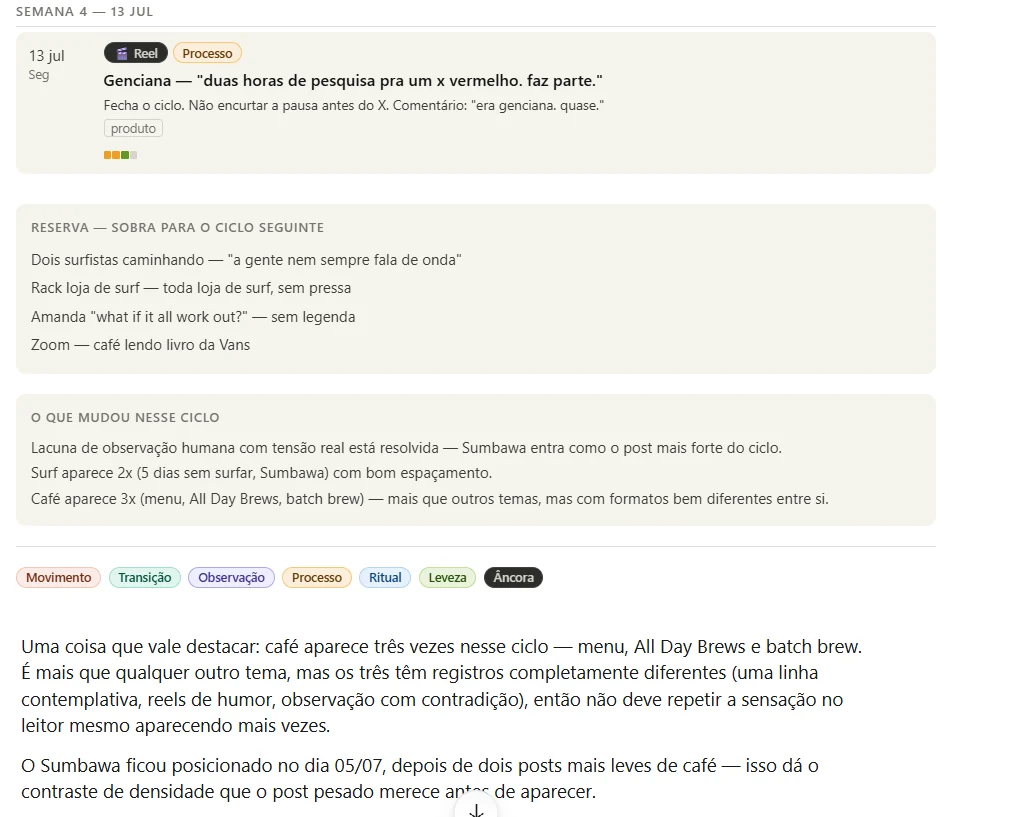
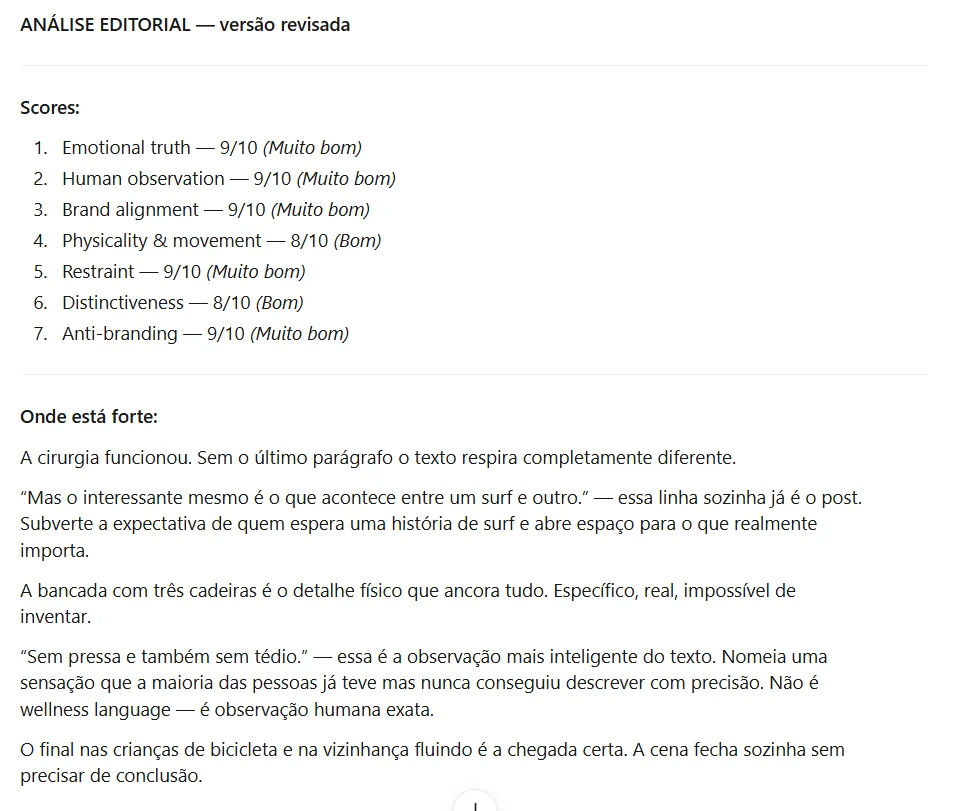
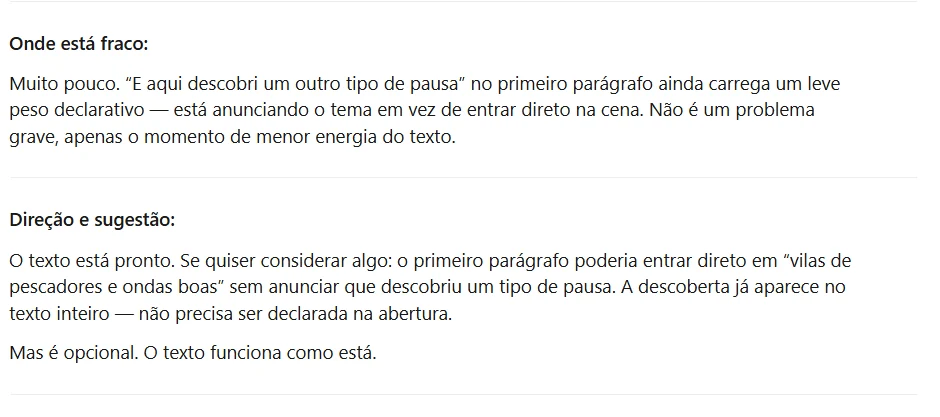
I built an editorial review process in Claude to question my drafts. It looked at human observation, brand alignment, and restraint, highlighting what worked, what didn’t, and where to revise.
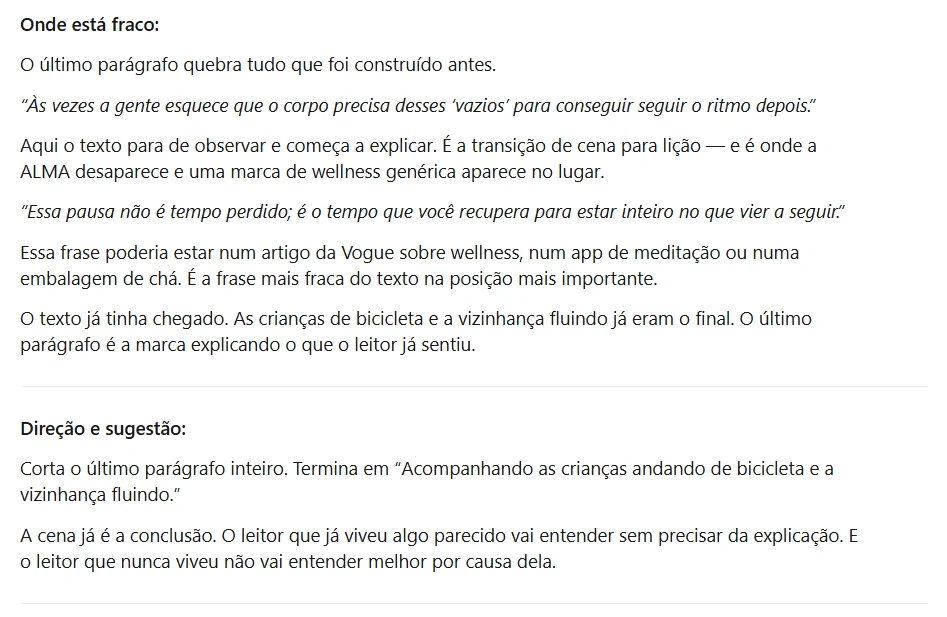
In a story about a fishing village in Bali, my first draft ended by explaining that rest isn’t wasted time. The review pointed out that the story had already said enough.
“That pause isn’t wasted time; it’s time you get back to be fully present for whatever comes next…”Original ending
“Watching children ride their bikes as the neighborhood carried on.”Revised ending
We cut the last paragraph. The scene stayed. The lesson went.
The screenshots below show the review process for that draft. What matters here isn’t the caption itself, but the approach: clear criteria, reasons, and suggestions I could accept or challenge.
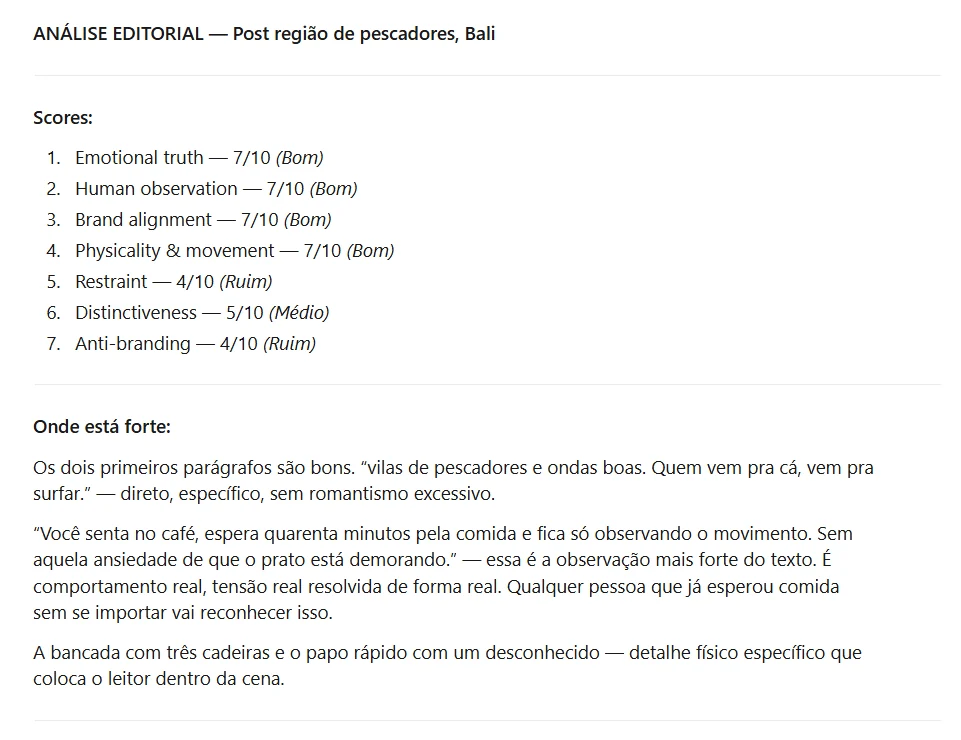
After editing, the system reviewed the text again. The scores were internal reference points, not objective measures of quality. I wanted to understand why por que the assessment had changed.
Months later, the framework became part of the problem. When the project needed product-focused posts, it rejected almost everything. I had to challenge it and adjust the criteria.
The account had 274 followers in the reference screenshot. Some posts reached well beyond that audience, mostly organically, while the products were still in development.
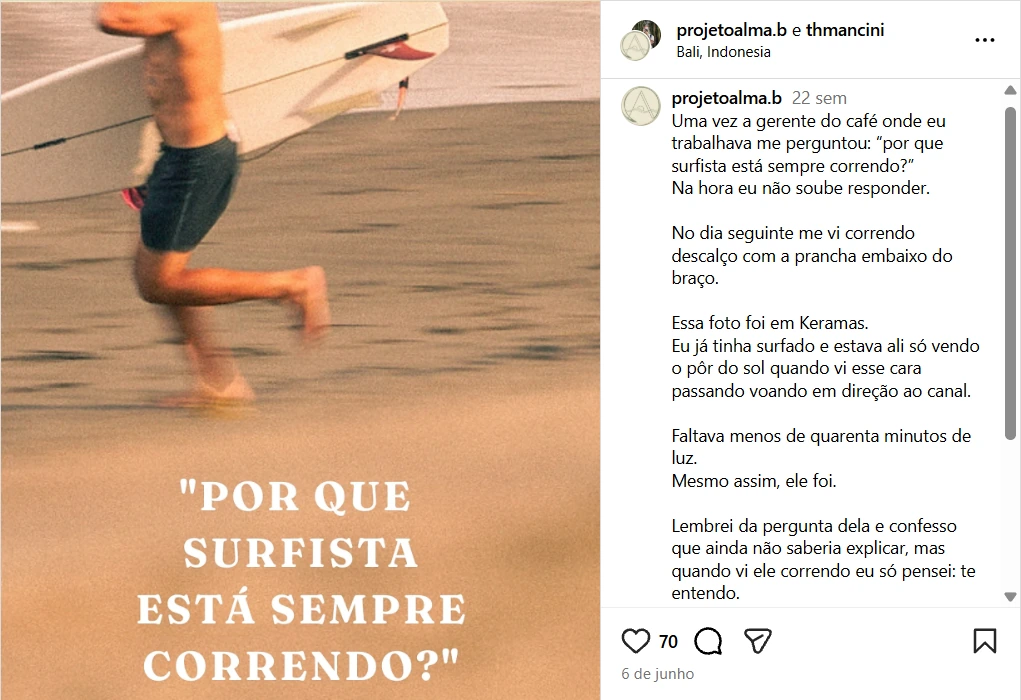
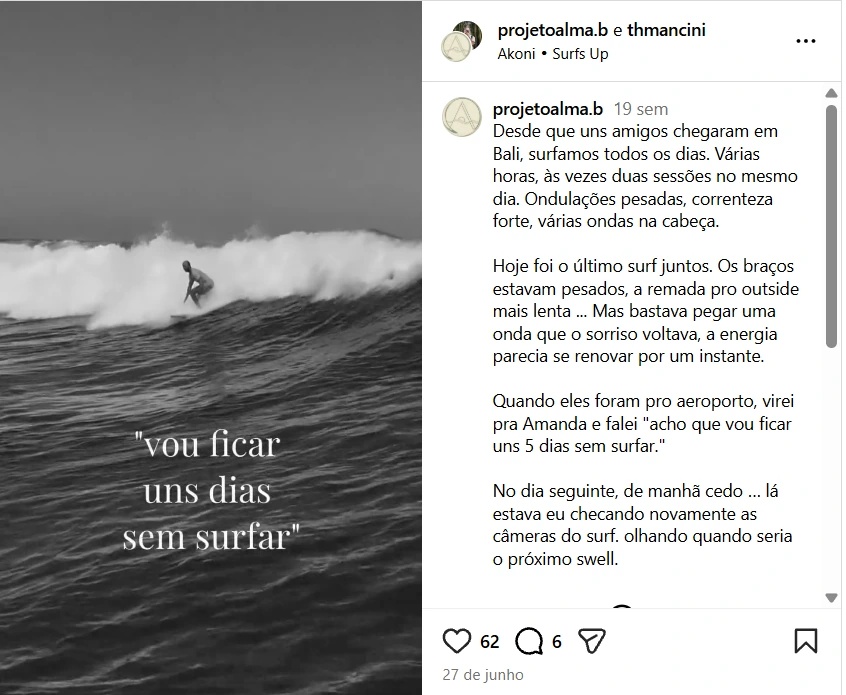
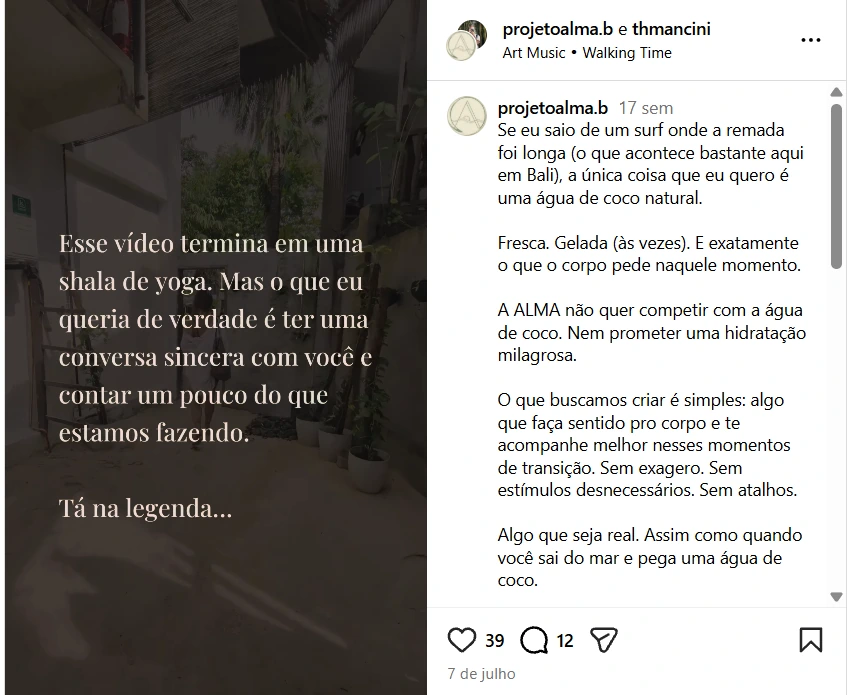
Figures from ALMA’s Instagram screenshots.
ALMA is still a work in progress. It brought me back to writing, gave me room to test formats, develop an editorial voice, and learn to use AI with more judgment.