How many times does a host have to answer the same question?
It started with watching how much work went into my parents’ holiday rental in Ilhabela.
I noticed how much time went into small communication tasks: explaining how the house worked, guiding guests, and answering the same questions again and again.
I started thinking about how to organize that information and make things easier for both hosts and guests.
Do Google ao Airbnb.
From the listing to the front door.
I knew SEO from my agency days. When I started helping with my parents’ rental, I wondered whether Airbnb search had anything in common with Google.
What I worked on in the listing
Research how people search for places to stay.
Go beyond room counts and communicate the experience of the place.
Adapt the presentation to seasonal differences.
Revisit titles, descriptions, and listing details.
The listing could bring bookings. The questions kept coming.
My father found himself answering the same questions several times a day. I realized communication needed to work after the booking, too.
An answer that didn’t need writing twenty times.
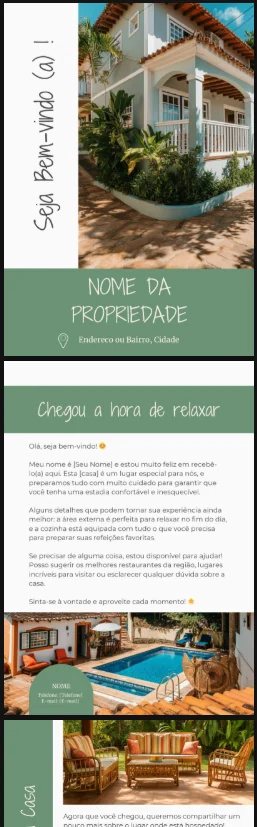
The welcome guide
I created an editable Canva guide with everything guests needed to know, without requiring another message.
House instructions, rules, checkout, restaurant suggestions, and local itineraries: all in one place.
The goal was to reduce repeated questions and make the stay easier.
One part of the work helped guests choose the property. The other made their stay easier once they booked.
What if other hosts were dealing with the same problems?
What began with my parents’ rental got me interested in how Airbnb works. I started studying listings, descriptions, photography, and how hosts presented their properties.
Desse processo nasceu o Host Playbook, a digital guide with practical advice for hosts who wanted to improve their listings.
But creating the resource was only part of the job. I also needed a way to reach the right people.
Before selling, I needed to talk to hosts.
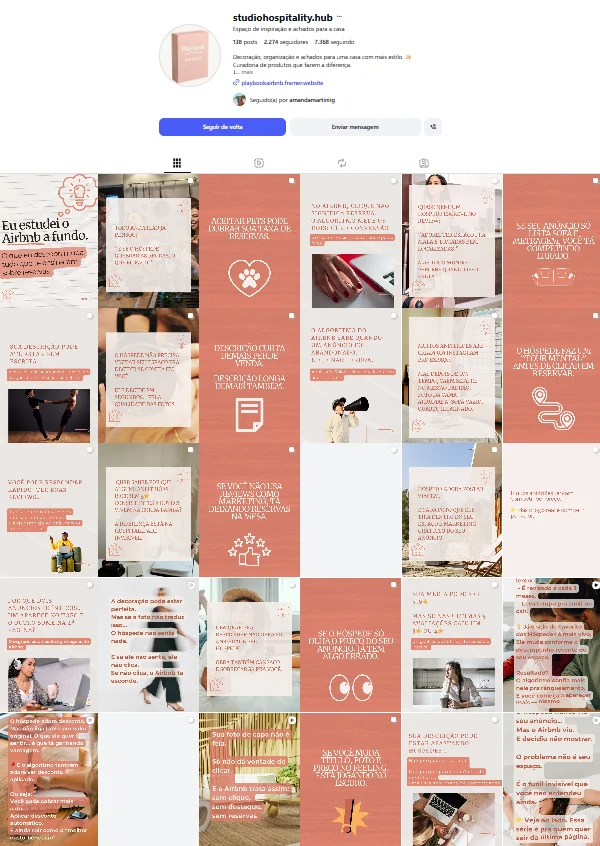
I created an Instagram account to share observations about hosting and how listings communicate their value.
I focused on familiar situations: a listing with views but few bookings, a description that undersells the property, a review that never arrives.
I also developed a visual identity that brought different topics and formats together.
Writing a post is different from asking for a sale.
When I started building the sales page, I realized I needed to dig deeper into conversion copywriting.
A post could spark curiosity. The page had to do more: frame the problem, explain the offer, answer questions, and help someone feel confident enough to decide.
I built the site in Framer, structured the Playbook presentation, and worked through the sequence of arguments leading to the offer.
It was a chance to think about copy, visual hierarchy, and the browsing experience as parts of the same message.
Five hooks. Different ways to spark interest.
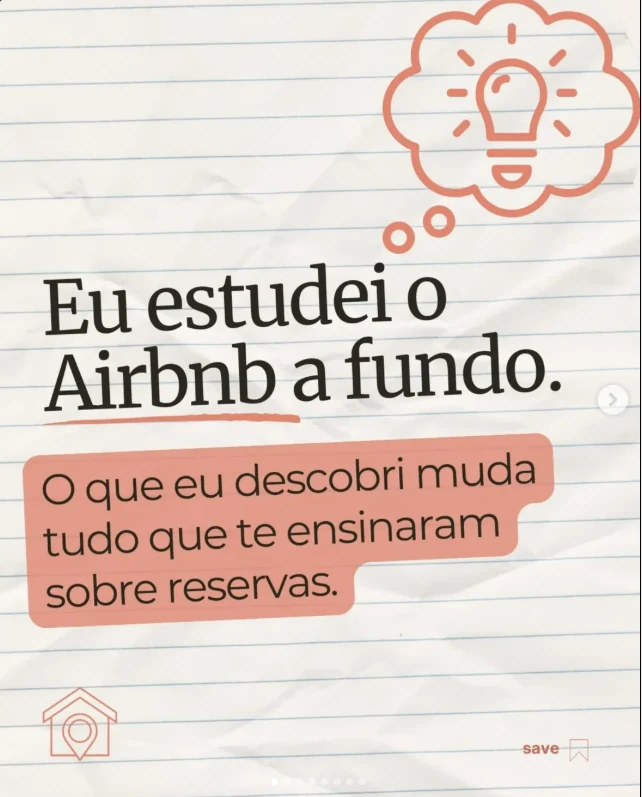
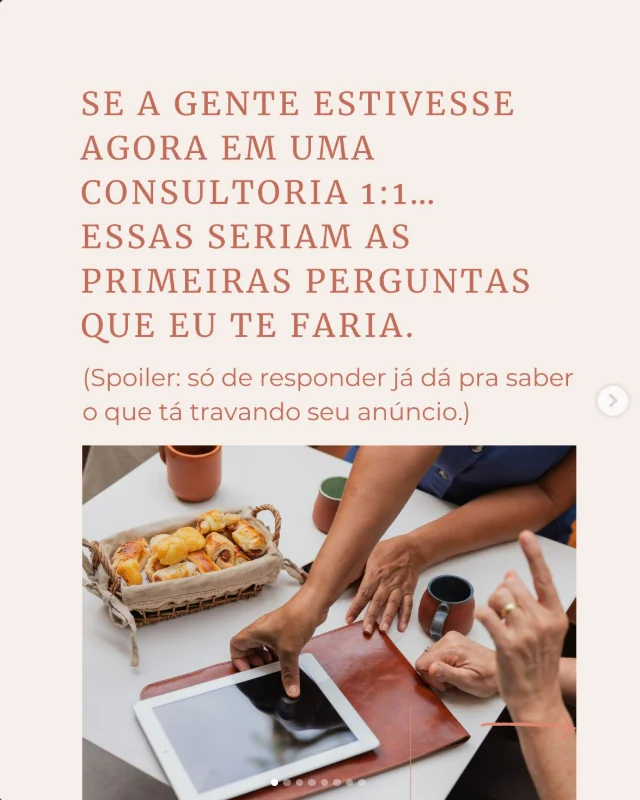
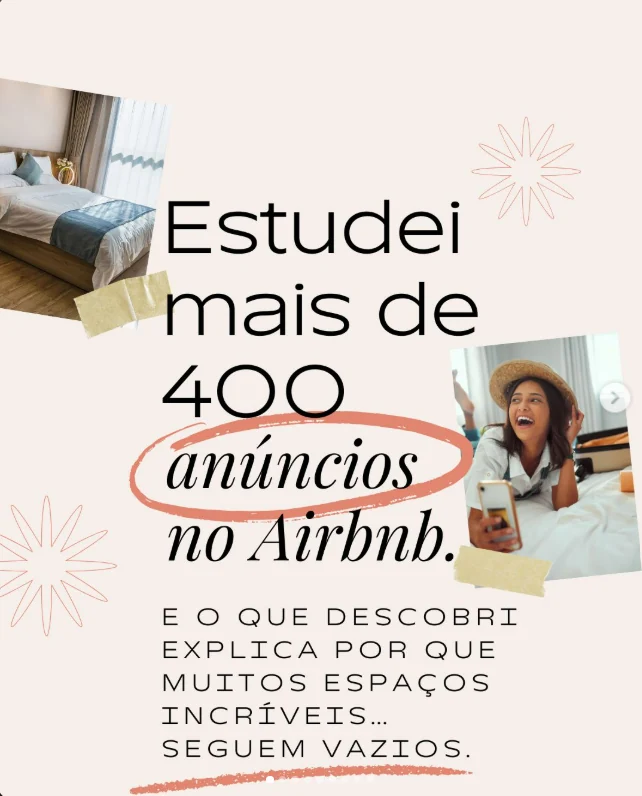
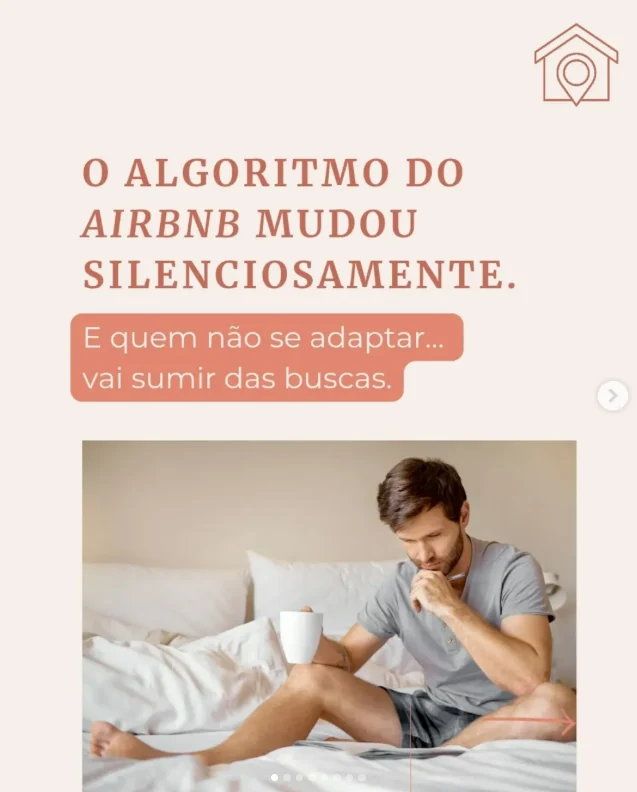
To promote the Playbook, I tested different angles. Some posts opened with a discovery; others invited hosts to assess their listings, presented research, or explored the feeling of missing opportunities.
I also shared behind-the-scenes updates to build anticipation. Some posts were boosted to bring visitors to the sales page.

When the content started selling.
With the Playbook, I started testing paid distribution. I boosted posts and tracked sales of the digital product.
Based on my records and recollection, I spent approximately BRL 800 boosting posts and generated BRL 2,475 in sales.
The experiment made me look at the whole journey: a post needed to create interest, but the page also had to deliver on the promise and explain the product clearly.
Content, copy, and experience aren’t separate pieces. Precisam conversar.